


In Part 1 of the series “Leveraging Agility to Create Economies of Learning Mindset”, I discussed the precarious nature of the CDO role given the expectations of building the organization’s data and analytic capabilities while simultaneously delivering short-term business impact. I called this the CDO Data-to-Business Innovation Dilemma:
CDO Data-to-Business Innovation Dilemma: Deliver meaningful and relevant business outcomes in the short-term while simultaneously and continuously building and transforming the organization’s data and analytics assets and capabilities.
The key to addressing the CDO Data-to-Business Innovation Dilemma is to view the development of the organization’s data and analytics plan as a journey, not an event. But the data and analytics journey is fraught with unknown challenges and new technology and business developments that only surface as the data science and business teams move along the data and analytics journey. Like the movie “Jason and the Argonauts”, your data and analytics journey must be prepared for whatever is thrown at them (like that darn skeleton army), and then pivot and adjust accordingly (Figure 1).
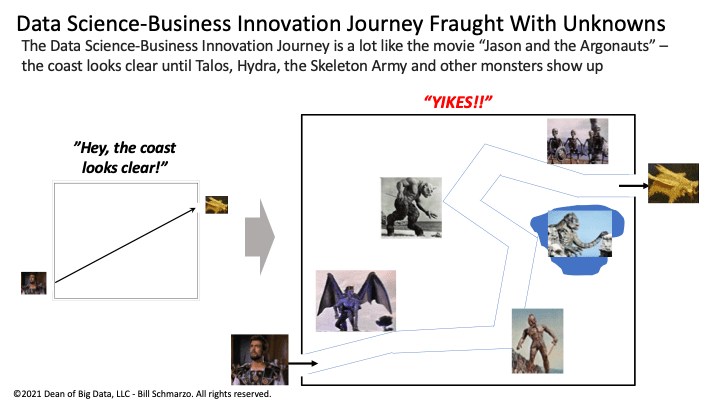
Figure 1: Data and Analytics Journey Fraught with Unknown Dangers
The only way to thrive on this journey of constant change, disruption, and transformation is to be agile and empower the organization’s ability to continuously learn and adapt. Here are four (4) rules that a CDO can embrace to address the CDO data-to-business innovation dilemma:
- “Big Bang” is replaced by “Economies of Learning”
- Compromise is replaced by Abundance Mentality
- Scale is replaced by Compounding
- Precision is replaced by Continuously-Evolving “Good Enough”
CDO Survival Rule #1: “Big Bang” is Replaced by “Economies Learning”
“Big Bang” thinking – or economies of scale thinking – is where the organization seeks to first build the entire ecosystem before they can use that ecosystem to start delivering business outcomes. This was the ERP approach where organizations first had to reengineer their business processes to map to the operational parity offered by packaged enterprise software solutions. These ERP “Big Bang” projects typically cost tens to hundreds of millions of dollars, took 3 to 5 years, and yielded operational parity at the end (because no one buys your products or services because you have a better HR or Financial or CRM system).
Economies of Learning is a measure of an organization’s value creation effectiveness from continuously learning and adapting the organization’s economic assets based upon changes to its operational environment.
Figure 2 shows the highly iterative, failure-embracing, trying/learning/unlearning/trying again scientific method necessary for modern organizations to exploit the economies of learning.
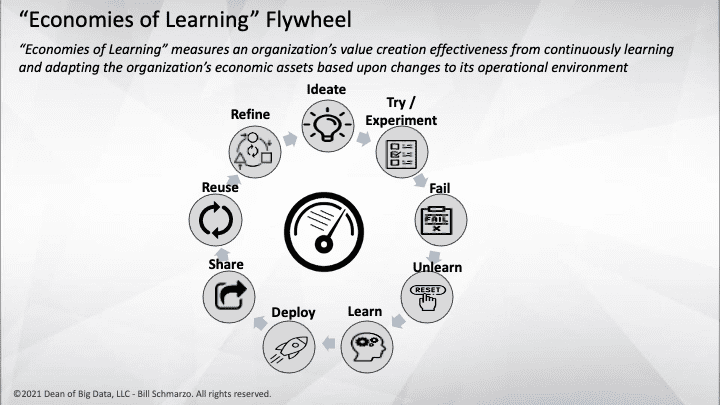
Figure 2: Economies of Learning Flywheel
The faster that the organization can accelerate its “Economies of Learning” flywheel, the more customer value creation, product and service differentiation, operational excellence, and market dominance they can exploit to derive and drive new sources of value creation.
Characteristics of companies that can exploit the “economies of learning” flywheel include:
- Compete in knowledge-based markets where environmental, economic, social, political, and operational conditions, and customer and market demands are constantly changing. By the way, what markets today are not knowledge-based?
- Apply the “Scientific method” to every decision to learn what works, what doesn’t work, and why, and then share and reapply those learnings across the organization.
- Focus on learning, not optimization since optimizing what works today can result in “optimizing the cow path” in markets and environments under constant change. No use in optimizing the organization to solve yesterday’s problems.
- Avoid the “Tyranny of Precision” where they can’t take action or make a decision until the decision is “perfect”. These organizations haven’t perfected the concept of just trying to improve the odds of making more informed decisions in an imperfect world.
- Encourage a culture of learning from failures. Failures are only bad if 1) one doesn’t thoroughly contemplate the ramifications of failure before taking the action, and 2) the lessons from the failure aren’t captured and shared across the organization.
CDO Survival Rule #2: Compromise is Replaced by Abundance
Traditionally when there is conflict across diverse and conflicting perspectives, someone must bend, someone must give in, and someone must compromise. Trying to align diverse organizational perspectives around a critical decision can be mind-numbing.
Many organizations operate with a scarcity mentality in these situations of conflict. These organizations deploy a “wear’em down” decision-making approach that leads to compromise and the “Least Worst” option that offends the fewest “important” stakeholders. This “lowest common denominator” approach leads to sub-optimal decisions from the perspective of what’s important to your customers and your organization. That’s like having Steph Curry on your basketball team but forcing everyone on the team to play at the level of Pete Chilcutt (sorry man). The “Least Common Denominator” decision-making makes no one happy, makes no organization stronger, and benefits the target customers… not.
On the other hand, organizations that embrace an abundance mentality – a mentality that everyone can win by contributing and leveraging their unique capabilities – seek to blend the diverse set of personnel “assets” across the organization to yield the “Best Best” Option. An abundance mentality drives the process of identifying everyone’s assets (e.g., skill sets, experiences, methods, tools, relationships, ideas), and then blending those individual assets in a way that fuels the innovation that leads to the “Best Best” option (Figure 3).
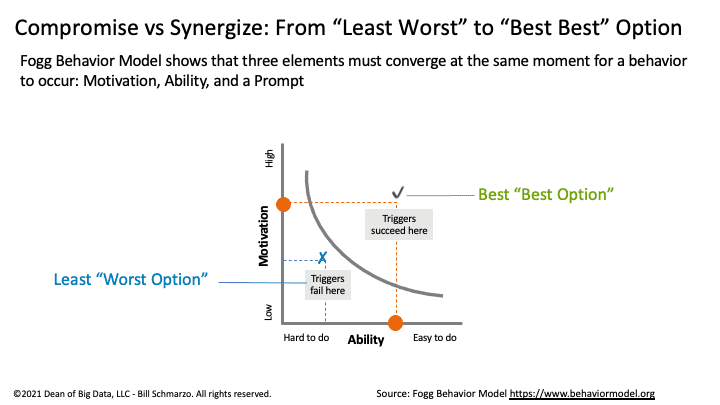
Figure 3: “Abundance Mentality is Key to Exploiting the Economics of Data”
Design Thing plays an empowering role in fueling that synergizing mindset.
Design Thinking leverages collaboration (co-creation) tools, techniques, and concepts to uncover and validate customers’ needs and desired outcomes within the context and constraints of specific customer “journey”
Design Thinking techniques, tools, and concepts can bring together and blend different sometimes conflicting, perspectives in an effort to strive for the “Best Best” option by:
- Clearly understand the targeted customer intentions, desired outcomes, and potential challenges using Stakeholder Persona Profiles and Customer Journey Maps.
- Mapping the customer’s journey to identify key decisions, KPIs, and metrics against which decision effectiveness is measured, expected gains (benefits), and potential pains (impediments).
- Identifying the broad range of “assets” (i.e., skill sets, experiences, methods, tools, relationships) that exist within individual stakeholders across the organization.
- Finally, envisioning and exploring integrating and blending the different organizational “assets” to create the “Best Best” option in support of the customer’s intentions, desired outcomes, key decisions, gains, and pains.
CDO Survival Rule #3: Scale is Replaced by Compounding
Compounding is the eighth wonder of the world. Albert Einstein
Waiting to have a perfect solution is a good way to guarantee that one delivers nothing. Instead, exploit the “law of compounding” where a series of small learning-driven improvements can have significant impact. For example, a 1% improvement compounded 365 times yields a nearly 38X improvement in performance and effectiveness (Figure 4).
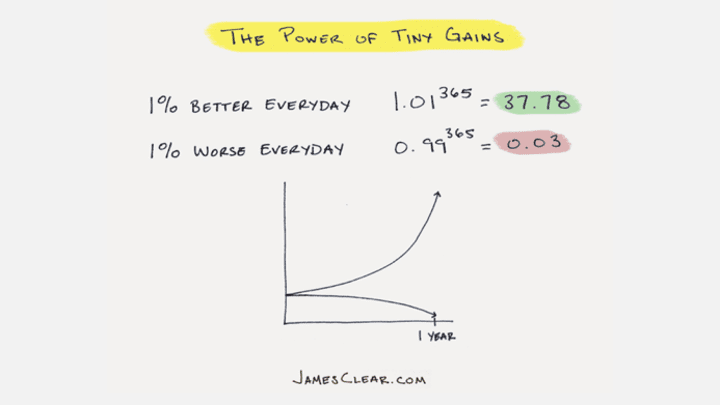
Figure 4: Power of Compounding Small Improvements. Source: JamesClear.com
Compounding is especially important in a world where Artificial Intelligence and Machine Learning models can continuously learn and adapt with every customer engagement and operational interaction.
For example, Reinforcement Learning models take actions within a dynamic environment to maximize cumulative rewards while minimizing costs. Reinforcement learning uses trial and error to map situations to actions to maximize rewards and minimize costs. Actions may affect immediate rewards, but actions may also affect subsequent or longer-term rewards, so the full extent of rewards must be considered when evaluating the reinforcement learning effectiveness (hint: this is key)
The article “10 Reasons why Compounding Interest is the 8th Wonder of the World” highlights the power of Compounding including:
- Compounding utilizes momentum
- Compounding teaches patience
- Compounding teaches and rewards discipline
CDO Survival Rule #4: Perfection is Replaced by Continuously-evolving “Good Enough”
Perfection is the enemy of progress.
“Good enough” is a term that is used to describe minimal effort. Usually, it is not a complement. But in the world of Economies of Learning, “good enough” can provide the jumping off point for learning and evolution.
CDOs can exploit the action-freeing nature of of “Good Enough” by empowering the Data Science and Business teams to collaborate to create continuous product and service improvements that deliver continuously “better” outcomes (more accurate, more timely, higher precision, more relevant, lower granularity, lower latency). See Figure 5.
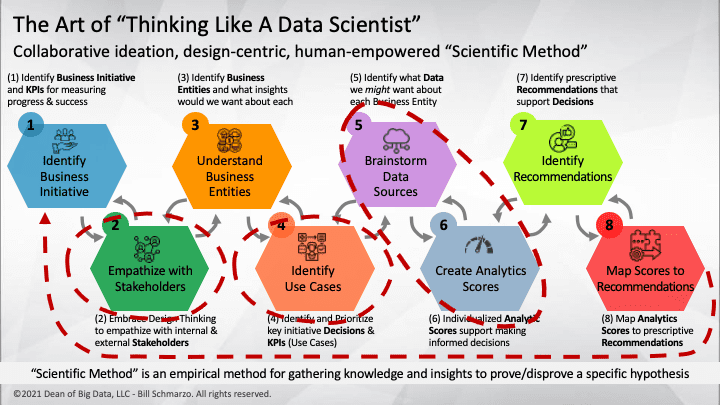
Figure 5: “The Art of Thinking Like a Data Scientist”
Some keys to continuously evolving “Good Enough” include:
- Get the Data Science team comfortable with ongoing incrementalism (from both a modeling and architecture perspective) in delivering partial solutions that deliver incremental business value more quickly.
- Educate business teams that data science is a journey – not a project – that requires ongoing collaboration to accelerate the continuous learning and adapting process required to deliver a continuous stream of business, operational, customer, employee, environmental, and societal value.
- Align both Data Science and Business teams on a common mandate where the end goal is to leverage data and analytics to continuously improve the odds of making informed decisions in an imperfect world
- Embrace the concept of a “Minimum Viable Model” with a “launch and learn” mindset where the initial model might only deliver marginally better results, but the effectiveness and accuracy of that model will grow through the learning gained with each use of that model.
Summary: CDO Data-to-Business Innovation Playbook
CDO Data-to-Business Innovation Dilemma: Deliver meaningful and relevant business outcomes in the short-term while simultaneously and continuously transforming the organization’s data and analytics assets and capabilities.
Delivering short-term business impact while building out the organization’s data and analytic architecture and capabilities requires a different approach. The traditional enterprise software approach – which worked marvelously to deliver Human Resource, Finance, and Customer Relationship Management operational parity – doesn’t work when dealing with assets like data and analytics that are explosive from the value creation and business differentiation perspective.
Organizations must embrace economies of learning, power of compounding, abundance mentality of inclusion, and action-freeing nature of “good enough” to create a value-centric culture of continuous learning and adapting based upon the changing needs of the business and operational environment. For the Chief Data Officers seeking to address the Data-to-Business Innovation Dilemma, embracing these concepts isn’t just key, it’s mandatory for your career survival.


